

St Louis’ Ghost Riders
The city’s refusal to enforce basic traffic laws is reckless and emblematic of wider governance failure.

Every place has their special characteristics and quirks that make it unique and feel like home. My move to St Louis has been full of these personal discoveries. I have come to appreciate Provel cheese of St. Louis-style pizza, grown accustomed to the sound of a tornado siren, and Midwest nice has warmed my cold Northeast heart. There is one thing I can simply not wrap my head around. In St. Louis license plates are a mere suggestion than a legal requirement.
Spend more than a few days driving around the city and it becomes impossible not to notice. Cars with years-expired temp tags, cars with no plates at all, cars with plates so faded they may as well be invisible. Local estimates suggest that tens of thousands of vehicles in the region are operating without proper registration. For a city constantly trying to push back against perceptions of crime and disorder, this feels like an incredibly visible problem to simply tolerate.
Unfortunately, St. Louis’ reluctance to enforce even the simplest road rules has serious ramifications. If registration laws feel optional, eventually traffic laws start feeling optional too. Speed limits are treated as a challenge, red lights become rolling stops, and stop signs are flat-out ignored. You quickly learn to hesitate before entering an intersection even when the light is green. At times, driving around St. Louis feels less like the set of a Mad-Max movie.
Navigating the city as a pedestrian or cyclist is even more frustrating. This is especially disappointing considering the immense strides the city has taken developing bike infrastructure and greenways—initiatives voted for and supported by the same residents now forced to navigate increasingly unpredictable roads.
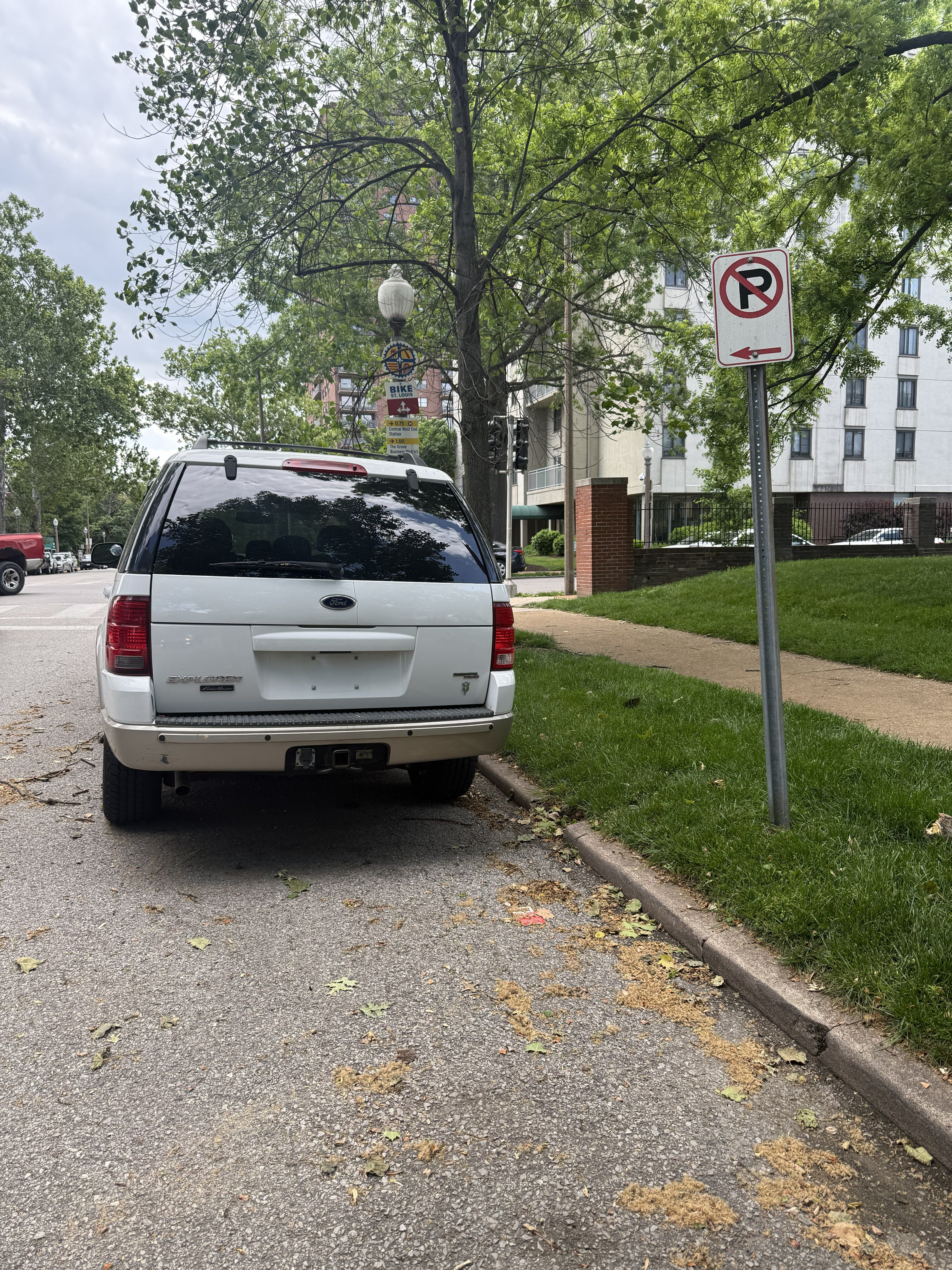
Unfortunately, the dangers do not stop there. If a car is not registered, chances are it is not being inspected either. That means all sorts of Frankenstein cars remain on the road. Missing bumpers, shattered lights, temporary windows, body panels held together by tape — vehicles that look one pothole away from dropping an entire transmission onto I-64. There is a reason inspections and registrations exist. It is one thing to endanger yourself; it is another to endanger everyone else sharing the road with you.


Unregistered vehicles also create broader public safety challenges by making accountability and enforcement significantly more difficult. St. Louis consistently ranks among the highest major cities in the country in violent crime, and residents are understandably defensive about the city’s reputation. Many will correctly point out that city statistics fail to account for the much larger metro population. Fair enough. But perception matters too. When basic laws are visibly ignored every single day, it reinforces the feeling that rules and enforcement are optional across the board.
This also carries serious financial consequences. Unpaid registration fees, inspections, taxes, and unenforceable parking violations likely cost the region millions of dollars annually. At a time when St. Louis is facing a shrinking tax base and trying to stabilize city finances, that is revenue the city can’t afford to lose. Unlike many states where dealerships collect taxes and process registration before a car leaves the lot, Missouri places much of that burden on the buyer after the sale. In practice, this means some drivers simply never complete the process at all.
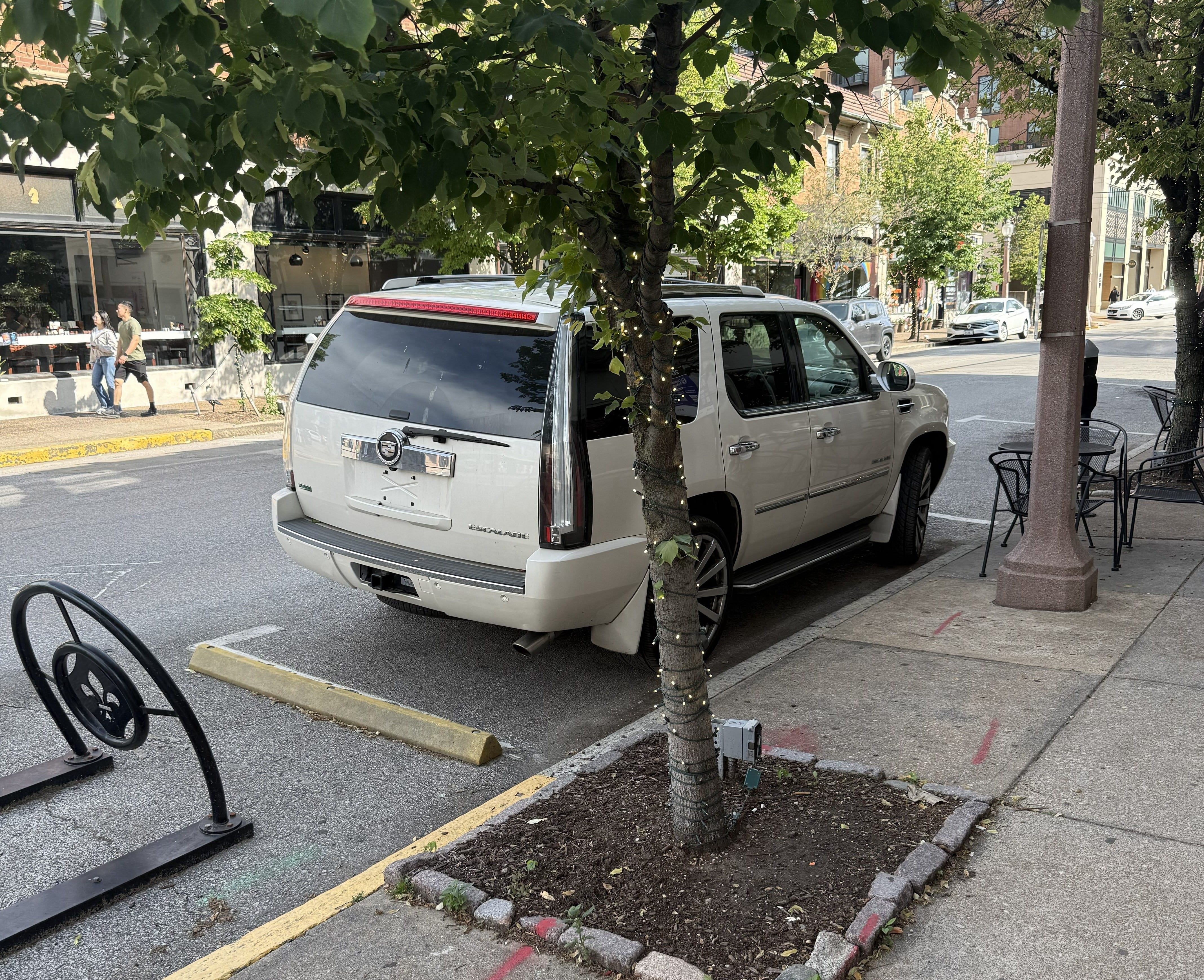
The result is not just expired temp tags but effectively untaxed vehicles operating indefinitely on public roads. A brand-new SUV can easily carry several thousand dollars in sales taxes, registration fees, and related costs. Multiply that across tens of thousands of improperly registered vehicles and the region is potentially losing tens of millions of dollars in revenue while simultaneously undermining public confidence in enforcement. Policy failure has led to enforcement apathy. These are not difficult problems to solve but the political will to do so has been lacking.
Admittedly change will be difficult. St. Louis has a complicated relationship with law enforcement and that undoubtedly plays a role in the reluctance to enforce registration policies. However, this should not be viewed as a punitive crackdown but as a civic reset.
Start with an amnesty program. Give residents a grace period to register vehicles, update plates, and complete inspections at reduced cost on an expedited basis. All the while removing unsafe vehicles from the road. Enforcement needs to become consistent. Driving without plates or registration should carry meaningful financial penalties, and repeat offenders should face impoundment. The goal is not punishment but to reestablish expectations and bring people back into compliance.
Much time is spent in neighborhood bars and newspapers alike discussing how St. Louis can recapture the glory days of bygone eras. The truth is the city already has nearly everything it needs to be a gem of the Midwest: terrific universities, a growing biotech sector, a gleaming new National Geospatial Agency facility, world-class civic institutions, historic neighborhoods, and an exceptional quality of life at an affordable cost.
From an outsider’s perspective, St. Louis’ own self-doubt and low expectations seems to be its biggest obstacle. Much like getting yourself out of a personal funk by exercising and eating right, St Louis need to start by doing the small things correctly and consistently. This is more than traffic enforcement; it is about rebuilding trust in the city and its governance. Until then, ghost cars will remain one of the most visible symbols of the city’s dysfunction.
The amnesty program to transition residents back to an expectation of compliance with car registration seems like a good idea.
Wonder why registration etc. is not just handled at the point of sale by dealers.
My dad and I did a bike ride in the Bronx recently and unfortunately had to ride around numerous ghost plates. The bad news is that they are also violating parking laws by parking in protected bike lanes. The good news is, we can kill two birds with one stone by bringing the hammer down!