

Private Infrastructure, Public Land
For decades this infrastructure network has quietly shown how public land and private capital can work together.

Even on vacation I can’t stop thinking about infrastructure. This past week I visited one of the most successful privately operated transportation systems in the country. Hundreds of thousands of people travel from around the world to use it every year, and millions more visit others like it across the country. The system spans square miles of inhospitable terrain, moving people, water, power and food to the far reaches of the territory. And even though the system is open to the elements, cold, windy and often bumpy, users happily pay premium prices for access. The private operator continuously reinvests billions to upgrade the system. And the federal government collects royalties while retaining full ownership of the underlying land.
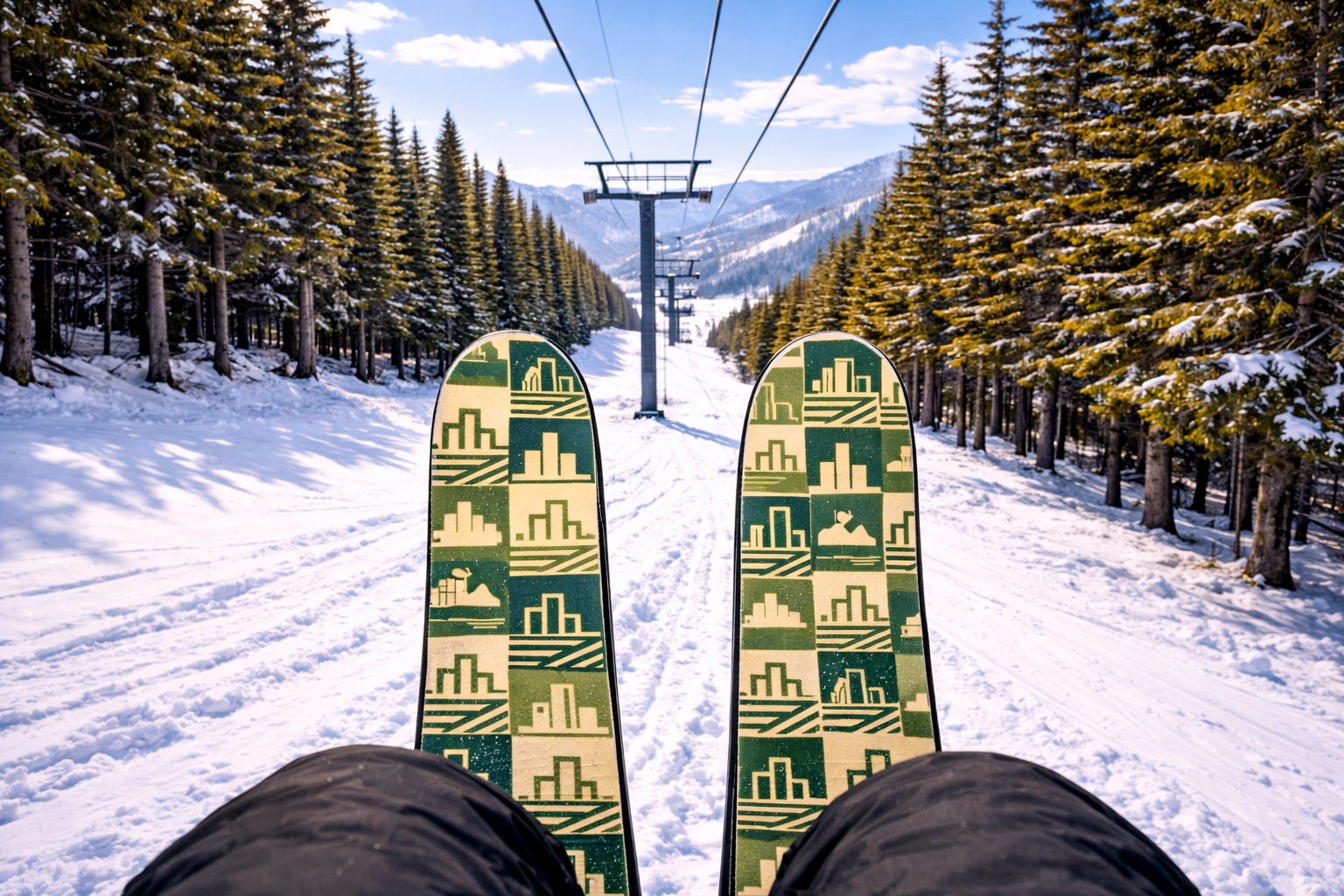
I’m talking about the ski resort. While it may not seem obvious, ski resorts offer a great example of the power of public-private partnership.
Many ski resorts located in Public Forests operate through long-term land leases issued by the U.S. Forest Service under the Nation Forest Ski Area Permit Act of 1986. In total, more than 120 ski areas across the country operate in National Forests under this agreement.
The land remains fully public and part of the National Forest system, but a private operator is granted the right to build and operate infrastructure within a defined permit area. Lifts, trails, snowmaking systems, lodges, maintenance facilities, and access roads are all financed, built, and maintained by the operator.
In exchange for those rights, the operator pays the federal government a percentage of its gross revenue, generally between 1.5 to 4 percent of the adjusted gross revenue. Lift tickets, ski school, equipment rentals, and on-mountain food service all contribute to that pool. All together, these agreements generate an estimated $40 million per year in revenue for the federal government (not the National Parks, more on that later).
These agreements run for decades and often on 99-year cycles. The long-term stability and predictability are essential to its success, giving the operators the certainty to invest millions into the infrastructure and operations. Lifts are replaced, snowmaking systems are expanded, and entire trail networks are reshaped over time. The operators are encouraged to continue to invest and evolve for decades while the public sector bears none of the risk. Regardless of weather or attendance, the government received their payment.
Importantly, the operator is not the owner of the mountain — they are its steward. The land remains public, and the permit requires the forest to remain accessible to everyone. Visitors can still hike, snowshoe, or travel through the terrain freely fulfilling the US Forest Service’s mission.
Clear Rules set the Table
Ski resorts work particularly well in this structure model for a few reasons and have lots of structural lessons for infrastructure as a whole.
First, the geography is clearly defined. Every ski resort operates within a permit boundary where the operators control the lifts, trails, snowmaking systems, base facilities, concessions and all hospitality. They operate almost as an amusement park in a controlled environment justifying further investment.
Second, the revenue model is straightforward. Visitors pay directly for the service they are receiving. There are no complicated value capture formulas or speculative economic benefits. People buy lift tickets and concessions, and the revenue supports the infrastructure.
Third, the time horizon is long. Mutli-decade agreements allows operators to invest continuously in upgrades and improvements rather than treating the system as a short-term concession.
This is not unique to recreation and offers a useful playbook for conventional infrastructure. Clearly defined rules and revenue streams make returns more dependable and encourage self-fulfilling investment. That same structure appears in other parts of the infrastructure economy.
Energy infrastructure is the clearest example. Transmission lines and pipelines routinely cross land that the operator does not own. Instead, companies obtain long-term rights-of-way across public and private land, build the infrastructure, and maintain it for decades while paying for access to the corridor. The land itself remains in public or private hands, but the infrastructure network functions as a privately financed system layered across it. This will become increasingly important as the US continues to expand and reinforce the national grid. Land acquisition is one the largest obstacles to these projects adjusting to a land lease agreement could be help these generational projects come to fruition.
Most marine ports operate similarly. Private operators will build and run the freight terminals, while land is retained by the public entity. Shipping companies pay to use those facilities, and the operators continuously reinvest in cranes, storage yards, and rail connections. Geography is defined, the revenue comes from the movement of freight, and the infrastructure evolves through long-term private investment.
Lastly, the ski resort offers a lesson to be applied to conventional transportation networks as well. The parallels are not exact because unlike a ski resort, transit users have plenty of other of ways to navigate the city. However, the real value is in territorial control and public land ownership. One of the largest obstacles for transportation infrastructure is securing right of way, often at massive expense. The cost of land acquisition alone often disqualifies many projects from feasibility. This pain in particularly acute in rail and transit projects. Using a similar long-permit could reduce the friction in expanding public transit or rail networks.
Ski resorts may not look like infrastructure policy, but they demonstrate a remarkably effective model. The government retains ownership of the land, a permit defines the territory, revenue is clear, and the time horizon is long. Within those rules, private operators build and reinvest in the infrastructure while the public sector bears little risk and shares in success. These same principles apply across all infrastructure: when public entities set the table with clear rules and revenue, private operators are positioned to invest, innovate, and keep critical infrastructure evolving.
Take care of our Parks.
There is one interesting wrinkle in this the current National Forest Ski Area Permit Act worth calling out:
The Forest Service does not actually get to keep the money generated. The fees paid by ski operators return to the federal treasury rather than back to the local forest unit. Congress has resisted letting agencies become self-funding, preferring to maintain control of spending through annual appropriations. This is the major critique of the system. While private attractions thrive, parks and forestry departments are continually underfunded. This is incredibly shortsighted. Our national parks have seen record attendance in the last few years, certainly bolstered by renewed interest during the pandemic. The Parks themselves should be benefiting and taking this change to reinvest for future generations.
Unfortunately, this is not unique to the federal park system. As I have written before, the NYC parks face a similar funding dynamic. Allowing park networks the ability to retain their revenue offers the opportunity to continue to maintain our parks for all to enjoy.

There is immense value in our park systems that are completely untapped. Our park networks can continue to be free and accessible for all of us to enjoy while being entrepreneurial and self-dependent for generations.